This post has been 'in development' for a long time. Bed 'B' is the bed in question. It's devoted primarily to bulbs, but with four lavender 'trees:' English and French (both bluish of hue) and two Spanish (pink and pinker) marching down the middle with a Spanish white lavender spreading at their feet.
I'm pleasantly preoccupied by the question of when lavender is a color and when it's a plant. See, for example, the color lavender (June 2012) and lavender paradox (April 2013). The story of how our lavenders started becoming trees is recounted in aftermath (March 2011).
So, after talking about bed 'C' bedfellows of contrasting colors (orange and yellow, cerise and white) in bedfellows, part 1, I wanted to talk here about bedfellows that are known for their fragrance and may be called by the same color name (lavender, of course), but are of different species: lavender and elephant garlic.
One of my expressed goals for 2013 has been to take more photographs, and indeed I have been gracing this blog with pictures since March. The first of these were taken with my phone (not a 'smart' phone, BTW), and then I dusted off last year's Vivitar Vivicam 46 to photograph daffodils. Alas, that camera needed new batteries for every 'shoot,' and so I replaced it with a Nikon Coolpix S01 which can be recharged from dependable household current. This new tool more than does justice to our gardenias and calandrinias, even capturing a bee in motion on a flower bobbing in the breeze.
Wanting the lavender and garlic to look their best in their photographs, I decided to prune the lavender trees. This process took over a week, done in short sessions during a major heat wave. By this time the garlic blossoms were bending low on dried-up stems, while the existing lavender blossoms stood higher, due to drastic removal of their lower branches. Posing the flowers did not help. I cut three garlic blossoms and balanced them in the lighter pink Spanish lavender, but could find no angle that showed both bedfellows to advantage.
Is a picture worth a thousand words? Or even the 360 I've expended so far on this subject? Maybe we'll find out next year.
Meanwhile, my mind's eye and nose enjoy juxtaposing two herbs of contrasting odors, being visited by omnivorous bees.
Saturday, July 6, 2013
Tuesday, June 25, 2013
bedfellows, part 1
Our front garden consists of three raised beds, each roughly triangular, bordered by eight-inch brick walls, and trisected by a path which Steve paved when he put in the bricks. Lately I've written a lot about the cactus and succulent bed (Bed 'C,' if you will); earlier in spring it was the bulb bed (Bed 'B'); and occasionally there's something to say about Bed 'A,' which includes all the rest -- from my repurposed Australian tree fern and a Meyer asparagus fern to a tall camellia, a clump of flowering ginger, and a patch of bromeliads.
One of my grad school professors liked to divide literature and philosophy into two processes: 'lumping' and 'separating.' This is a useful distinction, but sometimes the two are simultaneous. We have separated the garden into three parts and lumped certain categories* of plants into them.
Bed 'C' includes California poppies and Texas sun drops. Neither of these is a cactus or a succulent, but both are natives of states where cacti and succulents flourish. This year the orange poppies appeared to be finished before the yellow sun drops really got started, but the poppies have managed a 'second coming' since I cut back most of their dried-up foliage. Thus we have the plants side by side, looking very similar with their four delicate petals and wispy foliage.


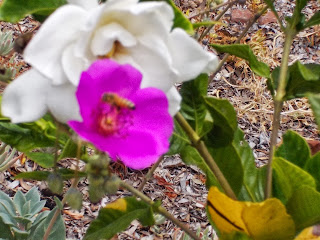
The calandrinia's pointed gray-green leaves are visible in the lower left corner of this photo, while its 'cherry pink' blossoms rise on slender 30-inch stems to crowd in front of the sturdy gardenias --larger this year than ever before, though not as symmetrical as the ones we wore to junior high dances.
*I cannot think of categories without recalling how Jorge Luis Borges (1899 - 1986) classified animals into types 'a' through 'n.' I hope you'll follow this link to a page of Borges quotations and scroll down to a longish paragraph beginning: "These ambiguities, redundances, and deficiences . . ."
One of my grad school professors liked to divide literature and philosophy into two processes: 'lumping' and 'separating.' This is a useful distinction, but sometimes the two are simultaneous. We have separated the garden into three parts and lumped certain categories* of plants into them.
Bed 'C' includes California poppies and Texas sun drops. Neither of these is a cactus or a succulent, but both are natives of states where cacti and succulents flourish. This year the orange poppies appeared to be finished before the yellow sun drops really got started, but the poppies have managed a 'second coming' since I cut back most of their dried-up foliage. Thus we have the plants side by side, looking very similar with their four delicate petals and wispy foliage.
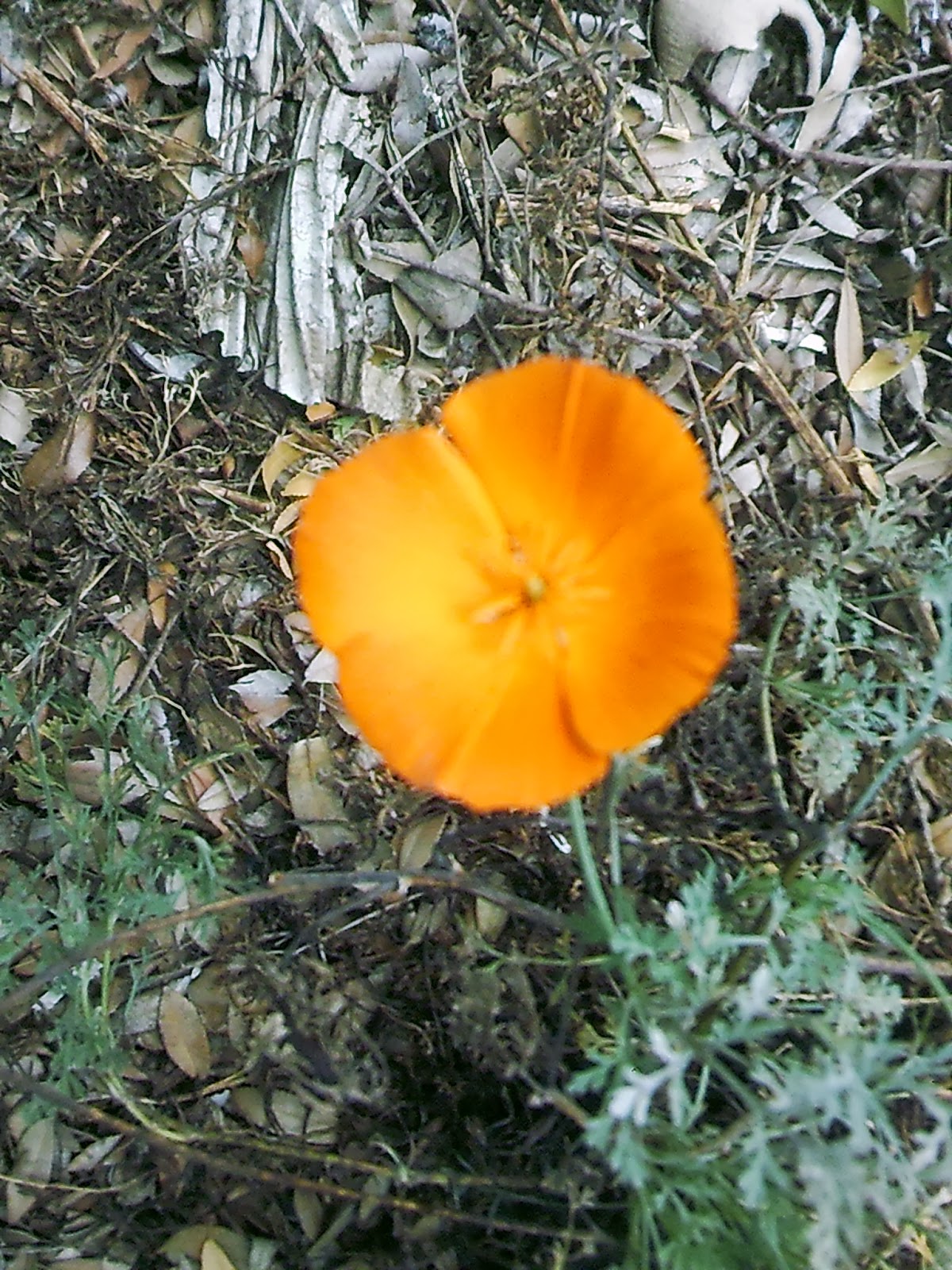
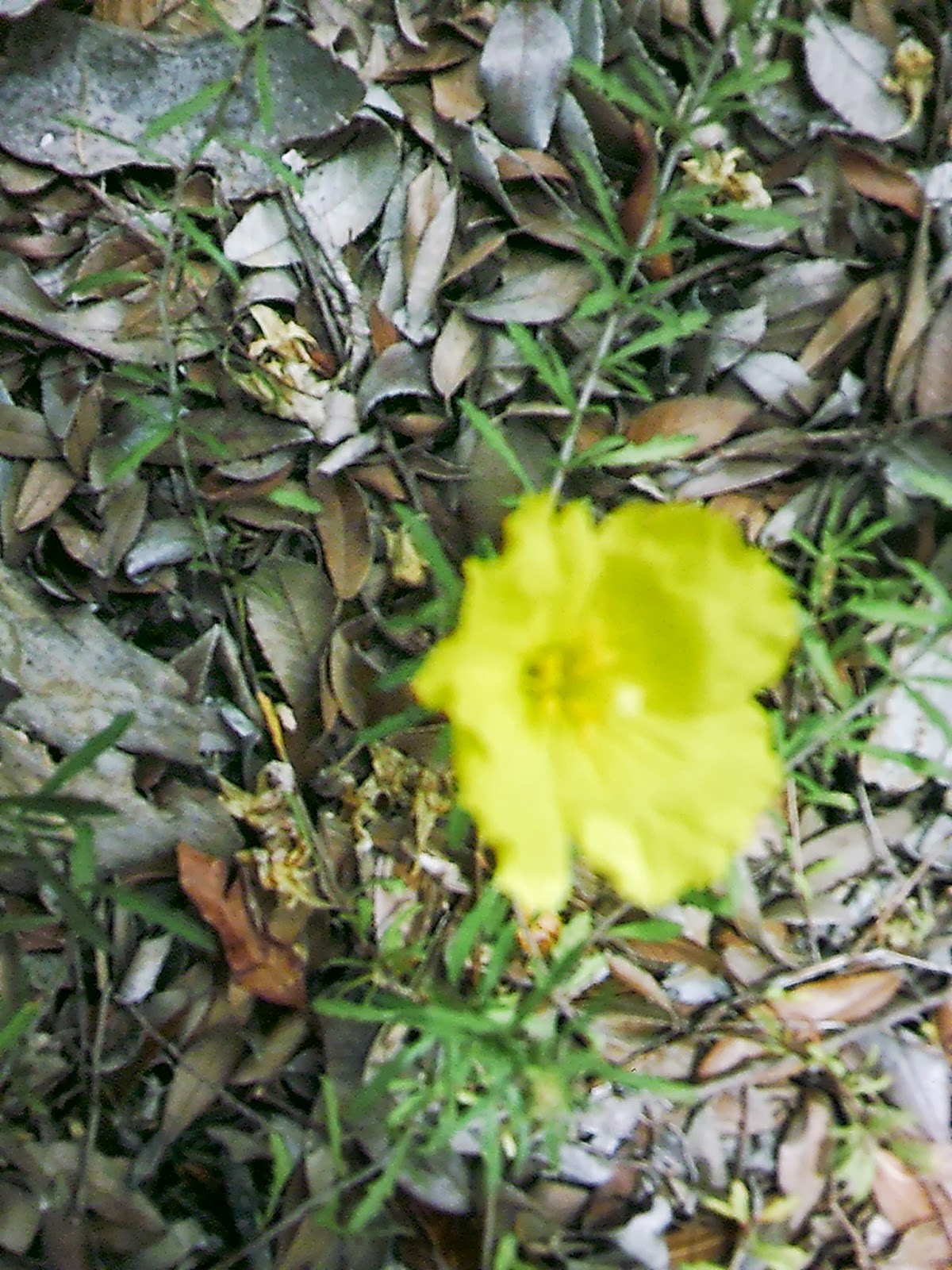
I hope that, as they spread, these natives of different states will intertwine into an orange-and-yellow ground-cover reminiscent of the iconic "Cherry Pink and Apple Blossom White" so popular in the mid 1950s.
But wait! We have true 'Cherry Pink and Apple Blossom White' in the same bed with the poppies and sun drops. White gardenias, gracing the cactus and succulent bed thanks to their seniority, are mingling with cerise calandrinias, newcomers from a backyard succulent sale two years ago.

See the well camouflaged bee? I have to wonder whether the gardenia feels deprived of insect attention. A fall dose of iron should be good for whatever ails it -- even the yellow leaves.
- - - -
*I cannot think of categories without recalling how Jorge Luis Borges (1899 - 1986) classified animals into types 'a' through 'n.' I hope you'll follow this link to a page of Borges quotations and scroll down to a longish paragraph beginning: "These ambiguities, redundances, and deficiences . . ."

Sunday, May 26, 2013
barrels of memoirs
Barrel cacti bring back memories of my family's earliest days in California at the end of World War II. Having been transferred here from Ohio by Owens Corning Fiberglas, my father was called upon to develop applications in many industries, from aircraft to sporting goods. One of his most unusual assignments was a trip to the desert (probably near Palm Springs) to develop 'guzzlers,' fiberglass-lined cisterns that collected rainwater for birds and animals. I can remember how he came home and raved about the wonders of the desert, with barrel cacti prominent among them.
Desert living does not appeal to me, but I do enjoy cacti and can grow them easily in our Mediterranean climate. Not long after Steve and I established the cactus and succulent bed in our front garden, I set out several small cacti which had been growing in pots for years. This may have been a mistake, as some of them were so tiny that we lost track of where they were. Here's a photo of the biggest one, a barrel cactus, with a dime at eleven o'clock to indicate scale:
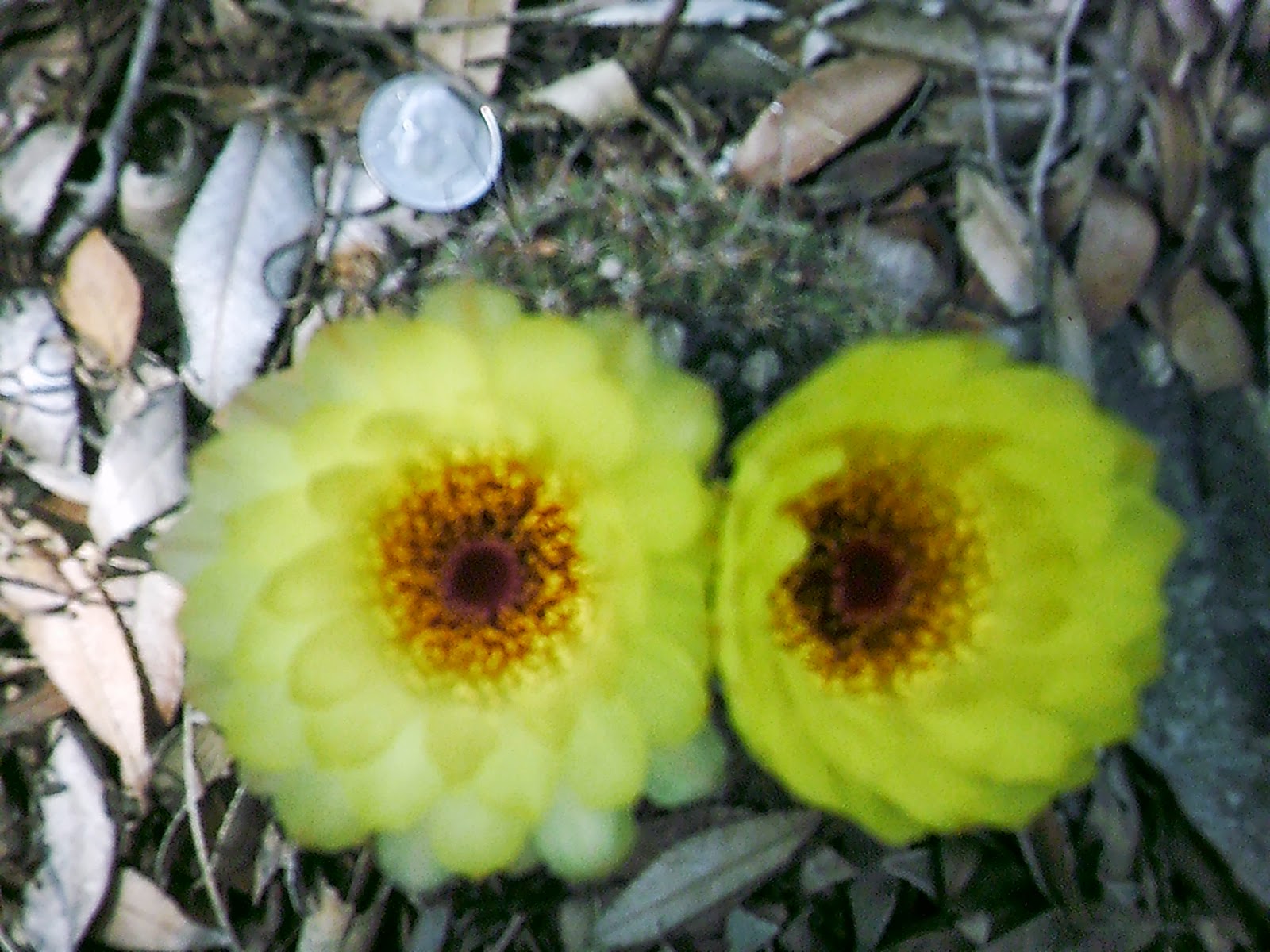
I stood on the sidewalk to take the photo above, but when I decided to photograph two more little barrels, I had to step right into the bed. This I did gingerly though I was wearing sturdy shoes, and indeed I almost stepped on a barrel that had successfully hidden from us for over a year. Growing less than two feet from the 'big' barrel, it looks to be a younger specimen of the same variety:
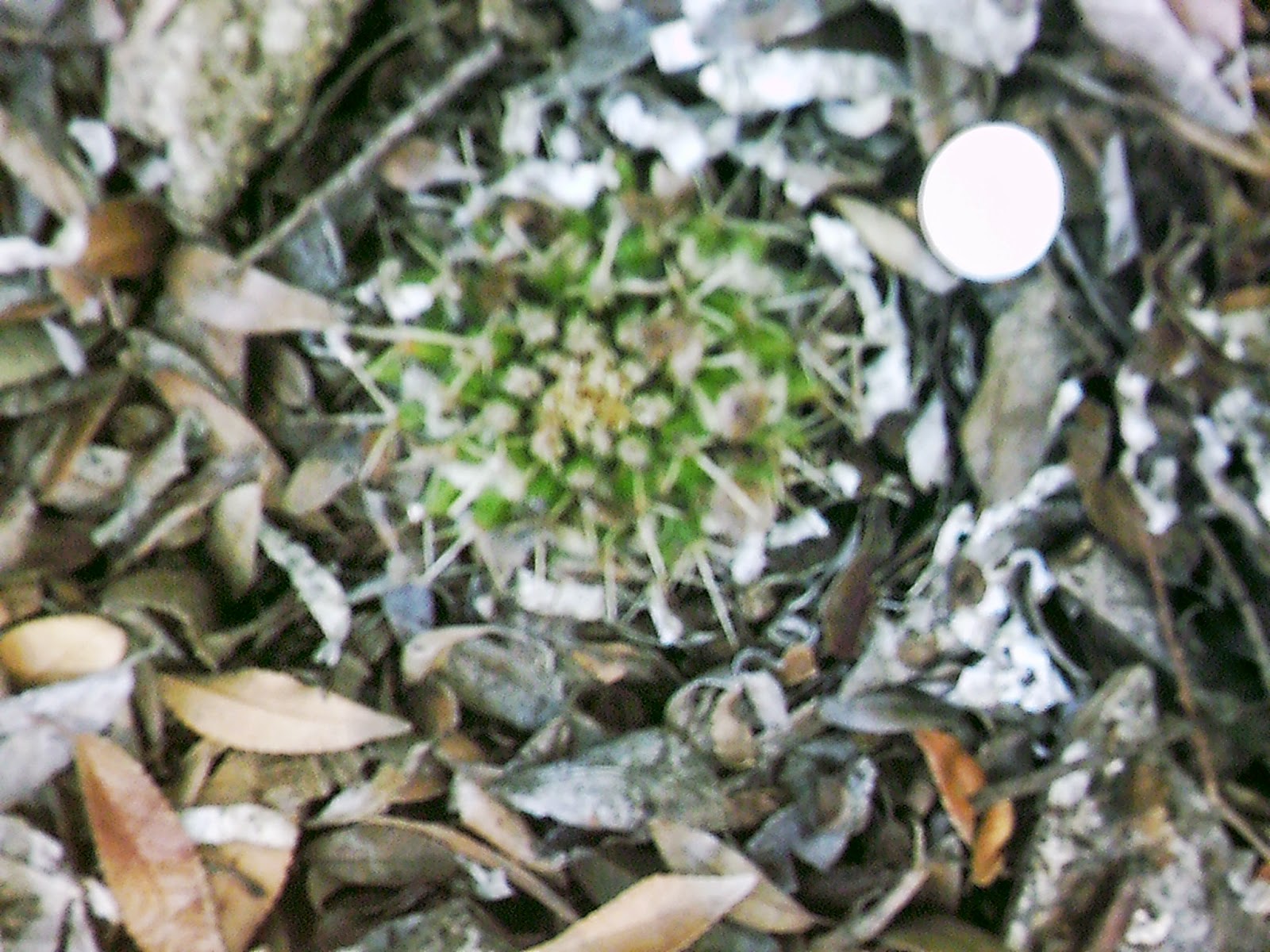
When I narrowly escaped stepping on this little guy, I was heading toward the smallest barrel in the garden:
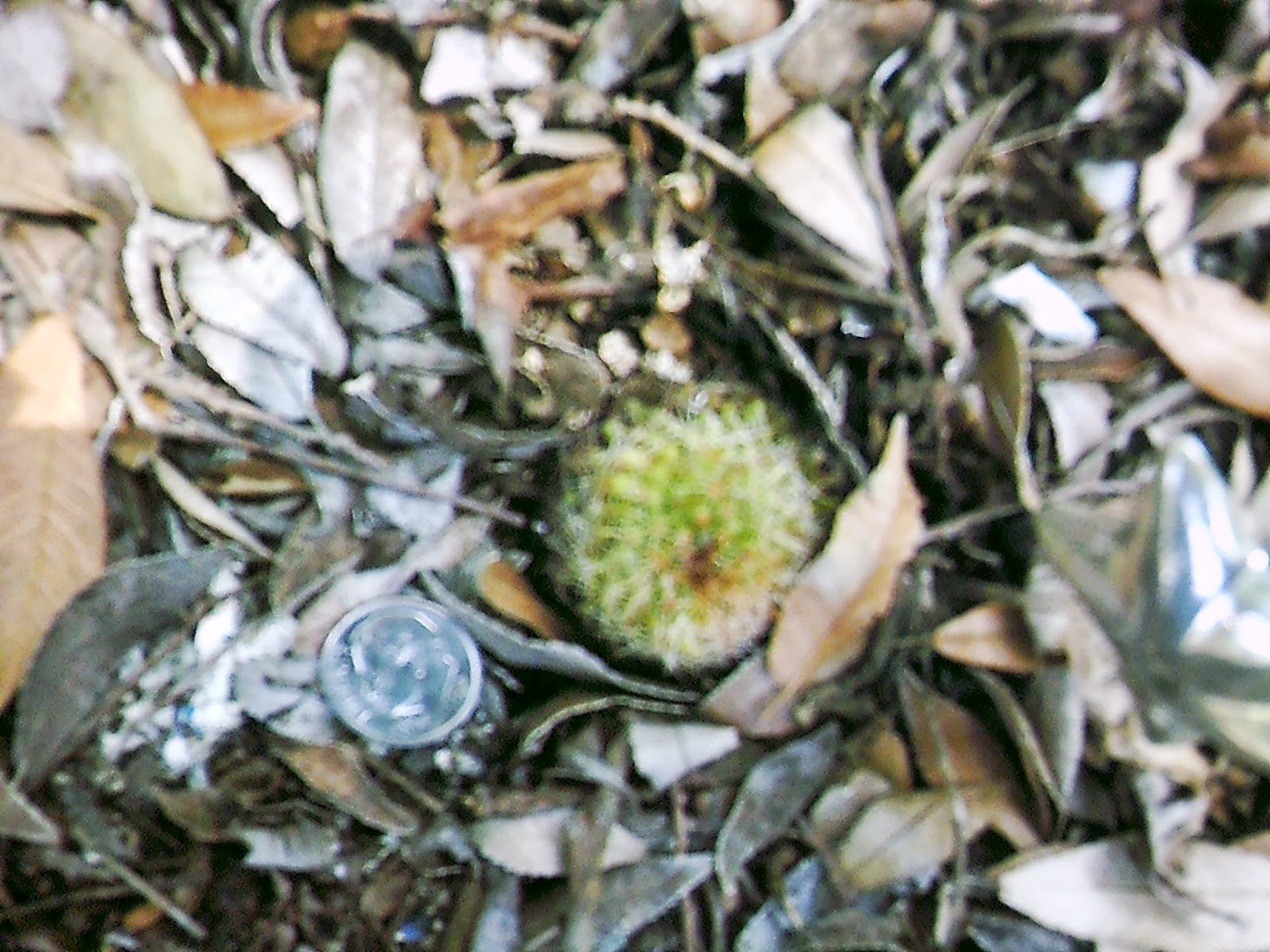
Obviously this one is a different variety, with its shorter spines and lighter green color. It would be eclipsed by a quarter. I'm eager to see what color its blooms will be, but I'm not holding my breath.
Finally, here's the last known barrel.It's very much like the first, but with longer spines and a somewhat lighter color. The dime (three o'clock) should've been closer to it, but I was not interested in pricking my finger tips.
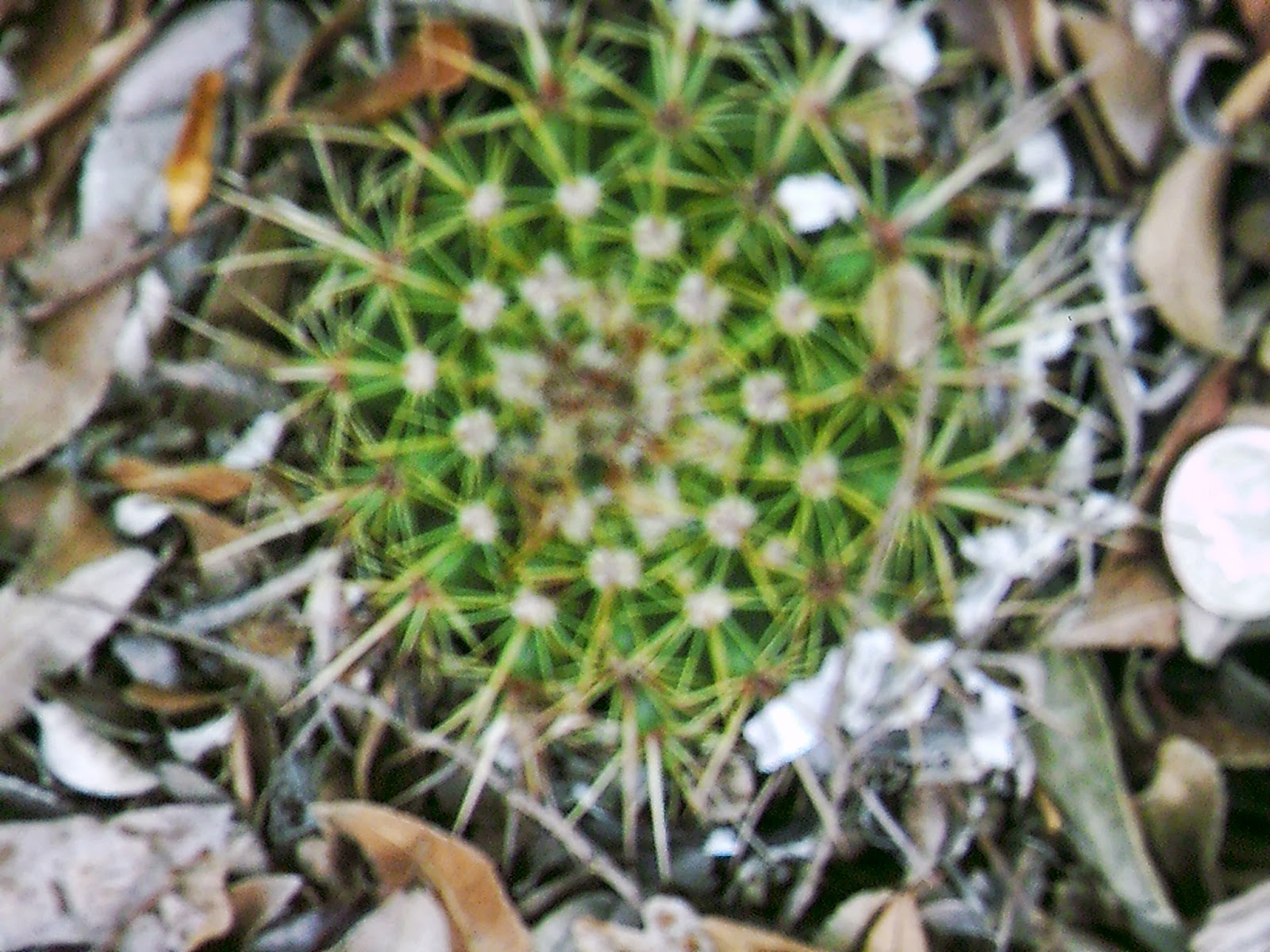
When I asked Steve whether he knew we had four barrels, he wanted to know: "Is that like a four-barreled carburetor?" Very like that AND "very like a whale," I think.
Barreling ahead through other parts of the garden, I see gardenia buds fattening and serrano chilies setting fruit: pulling together the best of so many worlds.
Thursday, May 16, 2013
you, gregor mendel!
I love the history of science and its early heroes. The eighteenth-century botanists* are my very favorites, but Gregor Mendel (1822-1884) is right up there. He is remembered chiefly as "Father of Modern Genetics" for his work with peas (and bees!). I am visualizing a black-and-white illustration of pea vines from my high school biology textbook, but sadly can't find it on line. A more beautiful and provocative picture (by illustrator Joseph A. Smith) graces the cover of Cheryl Bardoe's Gregor Mendel: The Friar Who Grew Peas (2006).

The following year, on April 11, 2011, I reported on volunteer sweet peas coming up as early as the previous November. These I had moved to stand next to the chain-link fence, interspersing them with seeds saved from 2011's "mixed" crop, plus seeds of a "Blue Celeste" variety that I was really anxious to see in bloom. No way:
I could probably spend the entire day writing about Mendel and/or the history of science. Suffice it to say, however, that Gregor (who advanced to the rank of Abbot) brought us the broad concept of dominant and recessive traits. He practiced a beneficent form of hybridization before 'GMO' became a dirty word. And let's bear in mind that he was working with garden-variety edible peas, whose blossoms only come in white and a pinkish purple.
What I want to write about today is the history of my recent attempts to grow sweet peas in a controlled range of colors.
On January 15, 2010, in the earliest days of this blog, I said:
. . . three small plantings of annual sweet peas are in various stages of development. The ones from the nursery have reached their promised five feet (they're a dwarf variety) so are sticking up above the top of the four-foot chain-link fence. The ones planted from seed are close to two feet tall, and the ones from the farmer's market are about eight inches tall and just beginning to reach out for the fence.Well, I had certainly forgotten ever buying any sweet pea plants, but I clearly remember that the seed packet promised "mixed" colors and I suspect that the plants I bought were the same. "Mixed," in fact, was what I got, including the white ones I really love best and the dark purple ones that become the focal point of any bouquet.
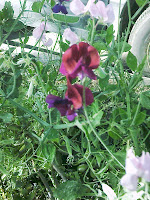
The following year, on April 11, 2011, I reported on volunteer sweet peas coming up as early as the previous November. These I had moved to stand next to the chain-link fence, interspersing them with seeds saved from 2011's "mixed" crop, plus seeds of a "Blue Celeste" variety that I was really anxious to see in bloom. No way:
Right now I have a bouquet of sweet peas on my desk -- twenty or so dark purple with ONE light pink. Moreover the purple ones have longer stems and larger blossoms, and about half of them are from the volunteer plant that bloomed in November.Whereas 2011's Sweet Pea Report was titled a plethora of purple, 2012's showed up on April 20 as paltry in pink. 2012 was the first year I went for an all-volunteer sweet pea crop, and here's what it looked like:
Now that April is more than half over, the volunteer sweet peas along the fence have barely started to bloom. They're pale pink, with short stems, and the vines are less than two feet tall. Nary a one of the sprawling sweet peas in the front garden has managed to bloom, but some are reaching over a foot long, so I haven't exactly given up hope.After diligently mulching with spent sweet pea vines in the summer of 2012, I went into my second year of all-volunteer sweet pea culture, and as the seedlings came up I let them stand where they had chosen to sprout. Many, as reported on February 18, were in our infamous parking strip. Like this:
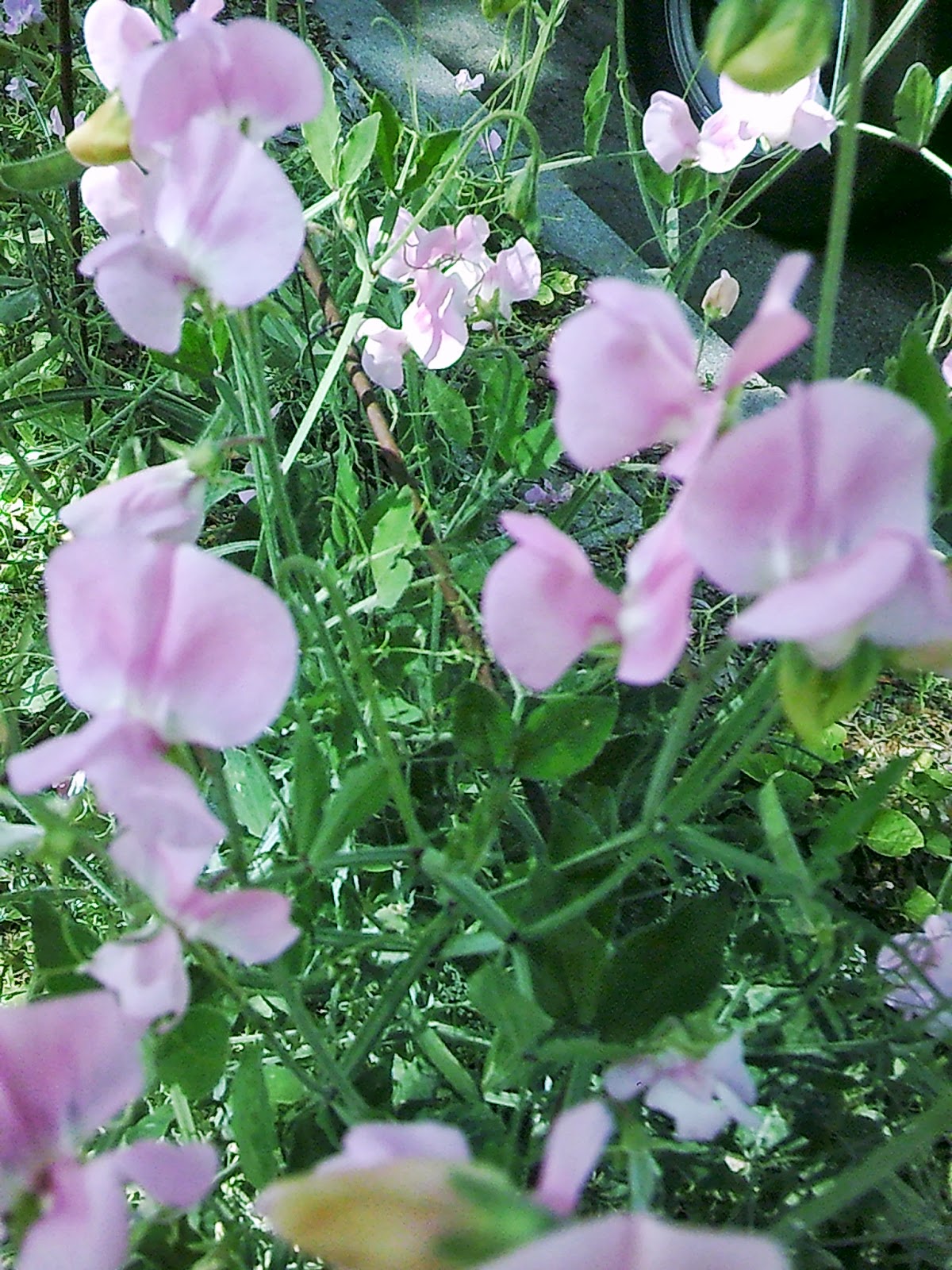

In the photo on the left, you can see the gray pavement of the curb running diagonally from right to left. And on the right, Steve's car is visible at curbside. The red-and-purple flower, I swear, was not in the original "mixed" seed packet. It looks like something to wear at a Red Hat Society event.
These long-stemmed blossoms have appeared on dense foliage topping out at around three feet. The 'bushes' would have been taller if I had provided taller supports. I have picked only three or four bouquets over the season. I'm purposely letting them go to seed, and looking forward to 2014's range of colors.
Will I ever grow a white sweet pea? Time will tell. Like blue eyes, white sweet peas must be a recessive trait. And I'm beginning to suspect the alleged pale blue sweet peas of being GMO's. Not in my front yard, Mr. Monsanto!
- - - - -
* Years ago, I ended a poem about plant name idolatry with this line: "Kyrie eleison, Christe eleison, Linneaus eleison."
Tuesday, May 14, 2013
basket case, part 2
When I told Steve I was going to blog about the theft of my planter basket made of t-shirt yarn, he asked, "Are you going to excoriate the person who stole it?" This was a difficult question, as I always try to maintain a positive tone. I said, "No, I'm going to lay a guilt trip on him." (Note the stereotypical masculine pronoun. This was what I said. I was too angry for my typically high level of political correctness.)
In his Preface to the Lyrical Ballads, a touchstone of literary theory, William Wordsworth wrote that "Poetry is the spontaneous overflow of powerful feelings: it takes its origin from emotion recollected in tranquility." The same can be said of most art forms, including blogging, and so, having reached a state of relative tranquility, I set about analyzing the emotions in which my "spontaneous overflow" had originated.
My 'guilt-trip' approach originated in the emotion of anger. It was based on emphasizing the amount of skill, work, and time involved in:
In fact I must confess that I have no idea how much of my time was involved. I had so much fun with all parts of the process that I would gladly have prolonged the time it took. Thus the "powerful feeling" of satisfaction ultimately triumphed over that of anger
Recollecting my satisfaction as an artist actually led to a feeling of pride as I entertained the possibility that my thief had a great appreciation for fiber art. But wait! What if he was only interested in the plants? What if he repotted the plants and threw the basket away? Oops! Here comes anger again. But the plants did have some value even though they're more abundant and easier to get than one-of-a-kind artisanal baskets.*
At the end of basket case, part 1, I had said I would move my surviving basket to a perch high up on its prickly host. Well, I changed my mind and actually placed it in a more natural nesting spot on the sidewalk side of the cactus. If anyone wants to steal it (thereby demonstrating appreciation for my work as a fiber artist), I think he should be able to do so without personal injury and (especially) without damaging our giant cereus. Imagine walking out in the morning and finding a basket thief sprawled and bleeding on the sidewalk, tangled from head to toe in long cactus branches. Or, he has been able to walk away, finding a pile of branches smeared with blood and bits of torn clothing.
Unfortunately I did not take a 'before' picture of basket #2. It originally held a couple of scraggly epidendrums (about seven inches long and with unkempt-looking aerial roots) along with another hopeful start of the donkey-tail sedum and a branching, reddish green succulent whose name I do not know. Preparing for the great re-hanging, I cut the epidendrums back to one or two leaves apiece, and wove their white aerial roots loosely through the top edge of the basket. Check it out:


If these epidendrums bloom, it will be the first time I have had any success with these 'poor man's orchids,' after more than twenty years of trying. Will I owe that success to the infamous basket thief?
- - - - -
* In line with all this soul-searching, I have to admit that I had stolen the donkey tail myself -- but only about five little (separate) sections, and those from a part of the plant that would not be noticed. The haworthia was one of two I won in a garden club raffle and thus it would have cost me fifty cents or less ($1 a ticket, 6 for $5).
In his Preface to the Lyrical Ballads, a touchstone of literary theory, William Wordsworth wrote that "Poetry is the spontaneous overflow of powerful feelings: it takes its origin from emotion recollected in tranquility." The same can be said of most art forms, including blogging, and so, having reached a state of relative tranquility, I set about analyzing the emotions in which my "spontaneous overflow" had originated.
My 'guilt-trip' approach originated in the emotion of anger. It was based on emphasizing the amount of skill, work, and time involved in:
- cutting and spinning the yarn,
- making the basket,
- planting the haworthia and donkey-tail sedum inside, and
- tending the little planter on a daily basis.
In fact I must confess that I have no idea how much of my time was involved. I had so much fun with all parts of the process that I would gladly have prolonged the time it took. Thus the "powerful feeling" of satisfaction ultimately triumphed over that of anger
Recollecting my satisfaction as an artist actually led to a feeling of pride as I entertained the possibility that my thief had a great appreciation for fiber art. But wait! What if he was only interested in the plants? What if he repotted the plants and threw the basket away? Oops! Here comes anger again. But the plants did have some value even though they're more abundant and easier to get than one-of-a-kind artisanal baskets.*
At the end of basket case, part 1, I had said I would move my surviving basket to a perch high up on its prickly host. Well, I changed my mind and actually placed it in a more natural nesting spot on the sidewalk side of the cactus. If anyone wants to steal it (thereby demonstrating appreciation for my work as a fiber artist), I think he should be able to do so without personal injury and (especially) without damaging our giant cereus. Imagine walking out in the morning and finding a basket thief sprawled and bleeding on the sidewalk, tangled from head to toe in long cactus branches. Or, he has been able to walk away, finding a pile of branches smeared with blood and bits of torn clothing.
Unfortunately I did not take a 'before' picture of basket #2. It originally held a couple of scraggly epidendrums (about seven inches long and with unkempt-looking aerial roots) along with another hopeful start of the donkey-tail sedum and a branching, reddish green succulent whose name I do not know. Preparing for the great re-hanging, I cut the epidendrums back to one or two leaves apiece, and wove their white aerial roots loosely through the top edge of the basket. Check it out:
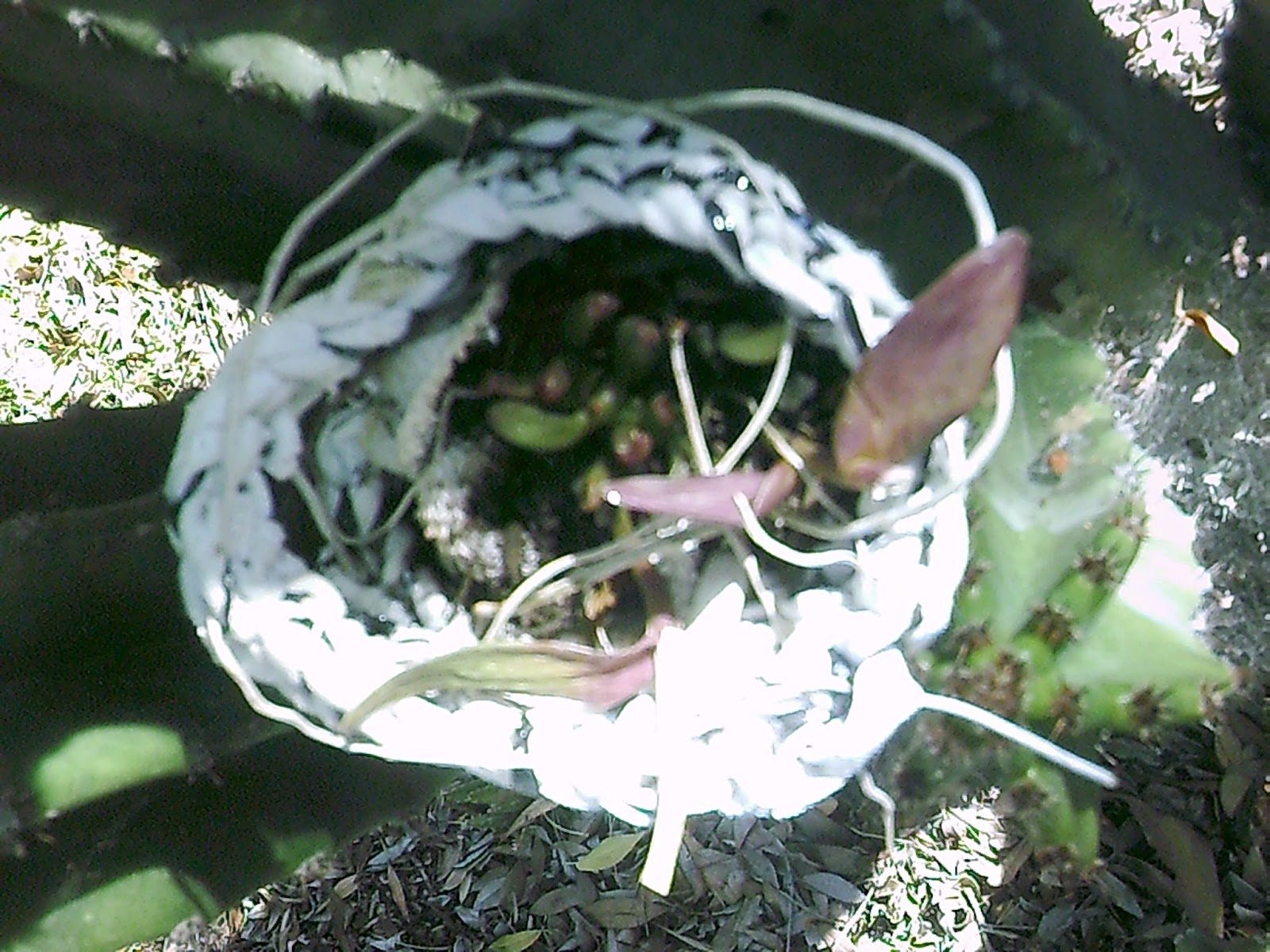
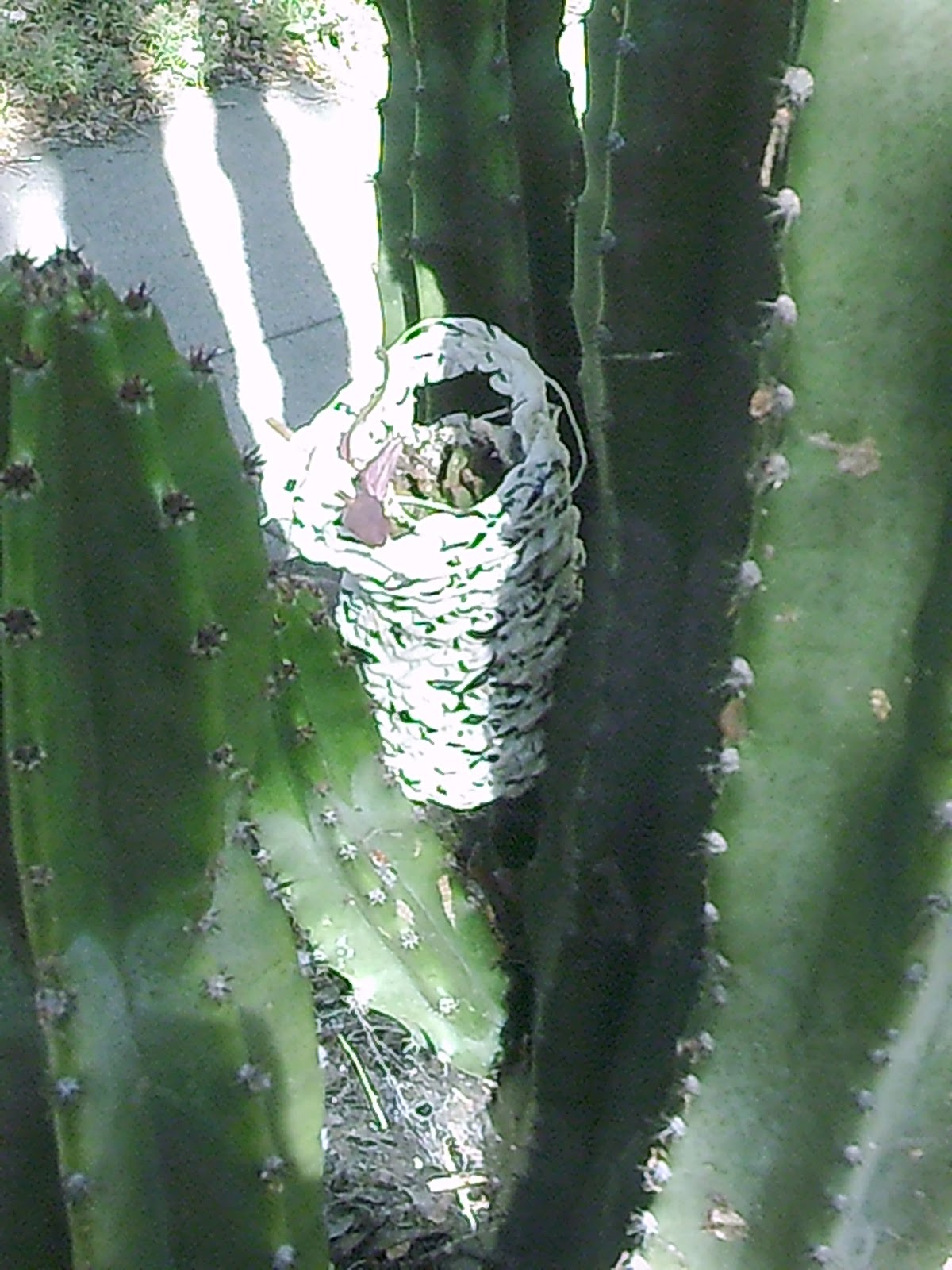
Here's the side view, showing tall cereus shadows on the sidewalk behind:
- - - - -
* In line with all this soul-searching, I have to admit that I had stolen the donkey tail myself -- but only about five little (separate) sections, and those from a part of the plant that would not be noticed. The haworthia was one of two I won in a garden club raffle and thus it would have cost me fifty cents or less ($1 a ticket, 6 for $5).
Monday, May 6, 2013
basket case, part 1

On March 22, I posted this photo on Facebook, not long after I'd posted a shot of my first crocheted mushroom. Made in the flush of euphoria over my 'coming out' as a fiber artist, it's crocheted freehand with yarn made from an old t-shirt. It looks sort of like a miniature laundry basket, but who needs a miniature laundry basket? I decided to use it as a planter, and so I lined it with the toe end of an old sock and filled it with potting soil. The reddish plant is a Haworthia (aka Zebra cactus), and the little translucent green things that look like jelly beans are members of the huge Sedum family, best known as 'donkey tail.' The dime should give you a good idea of scale.
The green 'frame' around the little basket is the eight-foot Cereus that anchors the northeast corner of our front garden. Its short but very sharp thorns are borne in little clumps -- good for holding the basket in place, I thought.
In addition to being free and abundant, old t-shirts (which take many years to break down in a landfill) seem to be an ideal medium for small hanging planters. The fabric is light in weight, yet absorbent, while the space between stitches provides ventilation. I found that watering it with a spray bottle worked very well, and I envisioned roots happily penetrating the fiber.
I had previously crocheted other things (hats and bags, mostly) with old t-shirts, but this was the first one for which I actually spun the yarn, on a hand spindle. This extra process added to the amount of time it took to make the planter, but enabled the basket-like texture that I loved so much.
On April 22 (Earth Day), I posted the same photo on Facebook again, with this sad comment:
When the first basket disappeared, I had already crocheted, planted, and hung another one, this time with audio cassette tape 'plied' in on the spindle. The second one looks even more like an oriole's nest. It hangs on the side of the cereus that doesn't face the sidewalk. I think I'll get out a ladder and move it to a higher perch. Six feet may be enough, but time will tell.Well, it's a month since I posted this photo of a tiny planter I'd crocheted from an old t-shirt. This morning I discovered that someone had stolen it out of my front yard. Happy Earth Day, somebody. Hope you're taking care of the little plants.
Saturday, April 27, 2013
naturalization
On a June 2011 visit to our Idaho farmhouse, I spent 'quality' time digging Austrian Copper rosebushes away from the foundation. These had been planted by Steve's mother, Alice (1912-1998), who had also planted a row of daffodil bulbs under the wide living room window. The daffodils make a stunning show every spring, and their foliage stands until it's mowed into the adjacent lawn.
While digging rose canes, I had naturally dislodged some daffodil bulbs, and though it was not the proper season to dig and separate them, I brought a few home, let them dry throughout the summer, and planted them in the fall without much hope. Idaho daffodils, I believed, would need a cold winter to flower. I was happy to be proven wrong, but still not confident that the bulbs would really naturalize. Maybe they were still feeling the benefit of freezing during the winter of 2010-11.
During the long fring and wring seasons of 2012-13, tall daffodil foliage appeared in our front garden, and by mid April I had to admit that Idaho daffodils had naturalized and were blooming against a backdrop of lavender and white freesias.
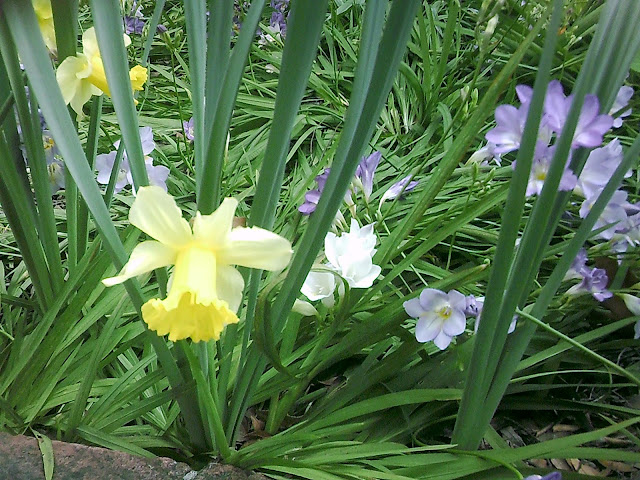
As you can see by the bit of brick in the lower left-hand corner of the photo above, I had planted the daffodil bulbs quite close to the edge of our bulb bed. Their drying foliage now stands in a row, sticking through the mulch I've used to cover spent freesias. The bulbs should be easy to find when I'm ready to dig them out in late summer or early fall. Then they will move to a circular space at the foot of our largest lavender tree, and thus the display of naturalized Idaho daffodils will be more graceful in spring 2014 and beyond.
But wait! What if Alice took the daffodil bulbs from SoCal to Idaho sometime in the 1940s or 50s and had naturalized them there in spite of the freezing winter? What if I was bringing them to their home instead of taking them away from it?
Many humans have believed that they 'took dominion' over the vegetable kingdom a long time ago, but plants can still have their secrets and surprises. Rightly so, I think.
While digging rose canes, I had naturally dislodged some daffodil bulbs, and though it was not the proper season to dig and separate them, I brought a few home, let them dry throughout the summer, and planted them in the fall without much hope. Idaho daffodils, I believed, would need a cold winter to flower. I was happy to be proven wrong, but still not confident that the bulbs would really naturalize. Maybe they were still feeling the benefit of freezing during the winter of 2010-11.
During the long fring and wring seasons of 2012-13, tall daffodil foliage appeared in our front garden, and by mid April I had to admit that Idaho daffodils had naturalized and were blooming against a backdrop of lavender and white freesias.
As you can see by the bit of brick in the lower left-hand corner of the photo above, I had planted the daffodil bulbs quite close to the edge of our bulb bed. Their drying foliage now stands in a row, sticking through the mulch I've used to cover spent freesias. The bulbs should be easy to find when I'm ready to dig them out in late summer or early fall. Then they will move to a circular space at the foot of our largest lavender tree, and thus the display of naturalized Idaho daffodils will be more graceful in spring 2014 and beyond.
But wait! What if Alice took the daffodil bulbs from SoCal to Idaho sometime in the 1940s or 50s and had naturalized them there in spite of the freezing winter? What if I was bringing them to their home instead of taking them away from it?
Many humans have believed that they 'took dominion' over the vegetable kingdom a long time ago, but plants can still have their secrets and surprises. Rightly so, I think.
Subscribe to:
Posts (Atom)

